
Tuesday, October 13, 2020
Universities are having to address hunger, too
It's key to remember that colleges and universities are filled with students who are "food insecure," meaning that they don't have a stable source of food and sometimes don't actually have meals to eat. There are a number of universities that are finding ways to do something about this. My previous university, the University of North Dakota is one. This video shows what my current university, Virginia Tech, is doing to help students, and it shows well what it means to the students who use the services.

Sunday, October 11, 2020
World Food Programme wins the Nobel Peace Prize
Congratulations to the World Food Programme on its winning the Nobel Peace Prize for 2020. It is a deserving organization, one that has made its way into many conflict areas all over the world that many others could not gain access to.
A key part of the organization is its work in school feeding. It does amazing work to set up programs that are not just handout events, but they work to put infrastructures in place for nations and localities to take over school feeding themselves, creating stable food systems for both children and, often, their families as well.
It's a wonderful reminder, in this time of pandemic, that peace and human rights are a major aim of feeding kids in schools.
For more info on the WFP's school feeding mission, see https://www.wfp.org/school-meals.
Monday, May 13, 2019
Sunday, December 10, 2017
Video of a House "Debate" in 2010 on supporting the National School Lunch Program
Seems quaint nowadays to have elected officials on BOTH sides of the aisle supporting the important progressive (though limited) changes that took place in 2010. Worth it to remember this moment, though. Some of the 13 representatives (all Republicans) that voted against “Expressing the support of the House of Representatives for the goals and ideals of the National School Lunch Program” may still be in the House, and I would encourage you to contact them if you live in their district, and encourage them to begin supporting these important ideals.
Monday, August 29, 2016
Saturday, July 18, 2015
Tuesday, April 21, 2015
This guy wants to give Texas schools the "freedom and liberty" to ignore nutrition science and obesity
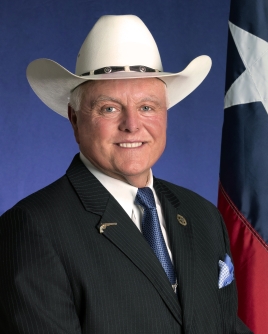
"This guy" is the Texas Agriculture Commissioner, Sid Miller, a Tea Party Conservative and staunch advocate of "freedom" and "liberty." He wants Texas schools to be able to choose whether or not they want to allow deep fat fryers back into schools. And he wants restrictions on sodas removed. And he wants to double the number of days that schools are allowed to sell junk food for school fundraisers.
He believes that it is a local jurisdiction's prerogative to decide what is healthy or not. Because of course the functioning of the human body varies from locality to locality, right? Why should we listen to nutrition science, when all we really need to know about health can be found in the treatises of Hayek and the party platforms of the Tea Party? Of course, most schools don't give students the "freedom" and "liberty" to not go to school, nor is there generally other options for food, but really, why should we be concerned about making all the kids of Texas a captive audience for Mr. Miller's fried fare?
Perhaps the one consolation one can take is that this is really more political stunt than serious policy proposal. Because of the federal regulations on school food, there's little chance that such proposals would produce reimbursable meals. Most sensible adult Americans don't think that fried food and sodas are good for kids, even though they eat such things themselves (as do I). But school food is different; it's a teaching tool, too. And, on the financial side, even the Tea Party wouldn't want to do without the many millions of dollars that subsidize actually healthy school meals. But it got Mr. Miller in the news. And here I am to helping to spread the word about how principled he's trying to be. You're welcome, Sid.
Sunday, March 1, 2015
More context on the "school lunches around the world" phenomenon
Both The Lunch Tray and Mother Jones (who quotes extensively from Siegel's blog on The Lunch Tray), give a compelling argument for why we need to be cautious about taking at face value the stories and web galleries that purport to show how fantastic other countries' school lunches are compared to those in the US. I've been guilty of spreading these images, too, but as I have said, I don't really get the fascination. Perhaps there's some notion that other countries haven't succumbed to processed food, that elsewhere they are holding onto their slow-produced, scratch-cooked meals featuring all sorts of real, organic food. The two stories I referred to in the first sentence above remind us that this wishful thinking just isn't true.
In my travels looking at school food in Anglophone countries--England, Australia, and South Africa, there's certainly a lot of interest in getting kids better food. But in all those places they struggle with the same Western diet we do. Pizza in English cafeterias, even after all of Jamie Oliver's struggles. Candy in Australian canteens and loads of hungry kids who get no subsidized lunch. Variations of corn mush in township schools in South Africa. In the private schools there they eat better, but still lots of access to junk. That said, I've seen better versions of school food, too.
It's a good reminder that school food is complicated and suffers through local, national, and even transnational politics before it takes the form it does on the plate. Picture galleries aside, the US has much to be proud of, and it has much to learn, as well.
In my travels looking at school food in Anglophone countries--England, Australia, and South Africa, there's certainly a lot of interest in getting kids better food. But in all those places they struggle with the same Western diet we do. Pizza in English cafeterias, even after all of Jamie Oliver's struggles. Candy in Australian canteens and loads of hungry kids who get no subsidized lunch. Variations of corn mush in township schools in South Africa. In the private schools there they eat better, but still lots of access to junk. That said, I've seen better versions of school food, too.
It's a good reminder that school food is complicated and suffers through local, national, and even transnational politics before it takes the form it does on the plate. Picture galleries aside, the US has much to be proud of, and it has much to learn, as well.
Monday, October 20, 2014
School Lunches Around the World, but in Video Form
I have to admit, I've never quite understood the fascination in the media about school lunches around the world. There are slideshows of them all over the place. Why so much attention? What do viewers take away from such compilations? What I tend to take away is how much more real the food is outside of the US. So much highly processed fare!
This one is interesting in that it is in video form, so you see the components put in place. A well produced piece.
This one is interesting in that it is in video form, so you see the components put in place. A well produced piece.
Tuesday, October 7, 2014
Monday, May 19, 2014
Monday, March 17, 2014
School Lunch Identity Politics in a Boy's Backpack Choices
Lunchtime is sometimes just the venue for many other politics playing out in the social world of the school, quite apart from the food. Here, a young "brony" is bullied and gets blamed for it because he crossed the acceptable bounds of masculinity.
School Bully Concerns - WLOS News13 - Top Stories
School Bully Concerns - WLOS News13 - Top Stories
Wednesday, March 12, 2014
Tuesday, February 25, 2014
Friday, February 7, 2014
A refreshing perspective on controversies over throwing away lunches
I don't have any opinion on the veracity of her claims to why she was fired, but I do very much appreciate this principal's attitude toward what the lunch service is there for. Particularly good moment when she says that it's about mindset, and that too many people look at these kids as "freeloaders" rather than kids who deserve to be fed. It's a community problem in loads of communities, and I think she's right that we have to have conversations about how to fix this that aren't only about finances.
I know that the School Nutrition Association has been working hard on so-called "charge policies," and it's time that the USDA and Congress step up and work with them to come up with humane solutions. Not that I want to give extreme conservatives another opportunity to call poor kids deadbeats, but hopefully the more reasonable voices will carry the day. We adults need to solve this without involving the kids AT ALL--no hand stamps, no having to carry letters, no trays thrown away, no cheese sandwiches to punish them until the money comes in. It's not their fault or their responsibility.
I know that the School Nutrition Association has been working hard on so-called "charge policies," and it's time that the USDA and Congress step up and work with them to come up with humane solutions. Not that I want to give extreme conservatives another opportunity to call poor kids deadbeats, but hopefully the more reasonable voices will carry the day. We adults need to solve this without involving the kids AT ALL--no hand stamps, no having to carry letters, no trays thrown away, no cheese sandwiches to punish them until the money comes in. It's not their fault or their responsibility.
Monday, January 13, 2014
Georgia Congressman Kingston and hypocrisy
It's been a while since I posted, part of which I blame on being chair of my department these days. But this video makes me want to post. It makes me want to post for a lot of reasons.
First, I think this is good reporting. Yes, it has a certain gimmicky flavor to it: "You don't like free lunches but you get them yourself! Gotcha!" But better than that, this report shines a light on the dealings that go on out of sight of the public for national politicians. They spend thousands and thousands on lavish meals and get treated to lots more free. Kingston doesn't want his constituents to know that. It makes him look privileged, and that's quite different from what he wants to be seen as.
So what does he want to be seen as? Well, I grew up white in the South myself, and I know race-baiting when I see it. The coded message here is not anything to do with work ethic. This message speaks to the resentments of middle class Southern whites who are constantly told by Republicans (and some Democrats) that their money is being taken by African Americans and Hispanics who are too lazy to work for themselves. Never mind that the vast majority of the kids on free and reduced school meals have parents who work (and likely much harder than the Congressman). Never mind that the middle-class white kids in the cafeteria didn't pay for their meals, either (their parents usually do). No, we are meant to imagine a freeloading welfare queen's kid living it up on taxpayer-funded tater tots.
I personally hope that the Congressman isn't simply ignorant of the truth of the National School Lunch Program. I think I prefer to believe he's being disingenuous, trying to curry favor with his resentful class of backers. Surely he must know that the National School Lunch Program is named after a Senator from his own great state of Georgia, Richard B. Russell, one of the framers of the original legislation. It was taken on by Russell and colleagues in the 1940s as a way to prop up Southern agriculture, which it still does. Yes, that free lunch for kids is paying for the free lunches at a fair few agricultural industry corporate headquarters in Georgia. Whenever they grow too many peanuts or pigs, rather than eating the losses in a financial sense, the surpluses gets taken off of their hands and sent to the mouths of hungry kids.
For shame, Congressman. You're either uninformed, disingenuous, or miserly. Rather than wrap it up in talk of trying to start a dialogue on work ethic, just get educated on why everyone took such offense at your statement. And maybe hanging out in a school with their hungry kids would make you a better Congressman; after all, hanging out at your free swanky lunches with dignitaries and donors hasn't done the trick.
WSAV: News, Weather, and Sports for Savannah, GA
First, I think this is good reporting. Yes, it has a certain gimmicky flavor to it: "You don't like free lunches but you get them yourself! Gotcha!" But better than that, this report shines a light on the dealings that go on out of sight of the public for national politicians. They spend thousands and thousands on lavish meals and get treated to lots more free. Kingston doesn't want his constituents to know that. It makes him look privileged, and that's quite different from what he wants to be seen as.
So what does he want to be seen as? Well, I grew up white in the South myself, and I know race-baiting when I see it. The coded message here is not anything to do with work ethic. This message speaks to the resentments of middle class Southern whites who are constantly told by Republicans (and some Democrats) that their money is being taken by African Americans and Hispanics who are too lazy to work for themselves. Never mind that the vast majority of the kids on free and reduced school meals have parents who work (and likely much harder than the Congressman). Never mind that the middle-class white kids in the cafeteria didn't pay for their meals, either (their parents usually do). No, we are meant to imagine a freeloading welfare queen's kid living it up on taxpayer-funded tater tots.
I personally hope that the Congressman isn't simply ignorant of the truth of the National School Lunch Program. I think I prefer to believe he's being disingenuous, trying to curry favor with his resentful class of backers. Surely he must know that the National School Lunch Program is named after a Senator from his own great state of Georgia, Richard B. Russell, one of the framers of the original legislation. It was taken on by Russell and colleagues in the 1940s as a way to prop up Southern agriculture, which it still does. Yes, that free lunch for kids is paying for the free lunches at a fair few agricultural industry corporate headquarters in Georgia. Whenever they grow too many peanuts or pigs, rather than eating the losses in a financial sense, the surpluses gets taken off of their hands and sent to the mouths of hungry kids.
For shame, Congressman. You're either uninformed, disingenuous, or miserly. Rather than wrap it up in talk of trying to start a dialogue on work ethic, just get educated on why everyone took such offense at your statement. And maybe hanging out in a school with their hungry kids would make you a better Congressman; after all, hanging out at your free swanky lunches with dignitaries and donors hasn't done the trick.
WSAV: News, Weather, and Sports for Savannah, GA
Friday, July 12, 2013
England's new School Food Plan arrives
After a relatively short year of work, the "healthy" fast food restauranteurs behind the LEON chain in England, Henry Dimbleby and John Vincent, have released their government sponsored School Food Plan. You can have a look at the basics in this video they produced:
In general, it's a surprisingly progressive result. I say "surprisingly" because it's not the conservative backtracking that I think a lot of people initially feared. You can read it for yourself at www.schoolfoodplan.com. Here are some basic points:
In general, it's a surprisingly progressive result. I say "surprisingly" because it's not the conservative backtracking that I think a lot of people initially feared. You can read it for yourself at www.schoolfoodplan.com. Here are some basic points:
- They want heads of schools rather than local education authorities (the school districts in US jargon) to be responsible for the meals service.
- The government has agreed to create a "specialist organization" to help schools do this.
- Perhaps most surprisingly, they have recommended that universal free meals be given to all primary students. The government has not agreed to this ("yet," they say).
- A simpler set of nutrition standards (only in draft form at the moment) will be made compulsory for all schools, including academies. (This has been a point of contention, for the Secretary for Education Michael Gove had originally exempted these charter school-like schools from the nutritional standards that had been so painstakingly crafted since Jamie Oliver-inspired reforms.) Importantly, they are recommending a return to food-based rather than nutrient-based standards, meaning that you count portions of a food type (meat, vegetables, fruit, etc.) instead of averaging meals that have enough vitamin A, iron, and so on.
- "Breakfast Clubs" are to be set up in disadvantaged schools.
- The target will be getting school meal take-up to 70% in 5 years, as a way of making the program solvent and improving its quality. They want to give packed lunches a bad name instead.
- Cooking will be a required subject for kids up to age 14. This was announced several months ago.
- Ofsted inspections (basically, government evaluations of a school) will include the culture and behavior in the dining hall.
- A raft of new public relations campaigns and informational sources will be produced to improve the image of school food and to help school heads learn more about how to run their programs.
While these are mostly sensible and, as I said, even progressive outcomes, there is still much to be concerned about here. Perhaps most troubling, the move to put heads in charge of the meals service continues a disturbing trend in the conservative push toward atomization of schools. It can be seen in the push to make teachers negotiate contracts school-by-school, too. If you want to make progressive reform impossible, this governance technique seems to say, just make the playing field diffuse; instead of installing reform nationally all at once, now school food reform has to happen at more than 22,000 schools one-by-one. Moreover, school heads have a great deal on their plates already (so to speak); will they have the interest, time, energy, and training to do it justice? Or will you get heads who only care about what is profitable? Or, perhaps one who is radically libertarian and thinks kids should have free choice to eat what they like?
And, though nutritional standards will be mandatory (if, they make clear, it turns out they are simple enough to follow), they are rewriting the standards AGAIN, reinventing the wheel as it were on years of effort that has already taken place. And the standards they have in draft form seem like a bit of a backslide. Deep-fried foods twice a week. Confections available during lunch. Red meat "at least" twice a week. One need only look at Marion Nestle's groundbreaking book Food Politics to understand the careful wording of these draft standards as avoiding "eat less" messages.
It is also heartening to see movement toward universally free meals. Janet Poppendieck's book Free for All presents a fantastic argument for why this is the right idea for America's system, and I think it applies well to England, too. BUT, this is the only recommendation they made to which the government didn't agree. It's a victory that they made the argument publicly, though. Now the conservatives at least have to defend why they won't do it.
My biggest impression—and I'll write more about this in the book I'm currently working on—is that this is exactly the kind of political cover that Michael Gove and the conservatives were hoping for. They are basically reinventing the infrastructure they destroyed. Take, for example, the second bullet above. They are going to create a "specialist organization" to help schools learn how to reform food. They already had that in the School Foods Trust, which they defunded. The Trust already had developed nutrition standards and conducted significant research. All of that was wiped away in the post-election sweeping out of "QANGOs." Now, though, the government are going to simply reinstall basically the same thing, and they get to act as if they invented it all.
Hopefully, at least this will reinvigorate discussions of school food and make some positive difference. As a progressive victory for better food, I say "We'll take it." As a political spectacle, though, I find this a troubling sign of conservative governance techniques to come, and it is imperative that progressives develop responses.
Sunday, March 24, 2013
What kids eat for lunch in France
This video is a couple of years old, but it's an interesting look at a very different sensibility surrounding school lunches. I don't know that we can ever get to escargot, but price doesn't have to be as much a barrier as we make it out to be.
Wednesday, March 13, 2013
The Big Majority of the Public is FOR School Food Reforms
Sometimes it can seem like the conservative voices in opposition to school food reform are the majority. It turns out that they're just louder; they are the squeaky wheels of the public discourse on school food. The actual fact of the matter is that a healthy majority of Americans want policies and legislation that mandates healthy food in public schools.
Exhibit A is this new report from Gallup on a poll they conducted:
http://www.gallup.com/poll/161318/americans-favor-limiting-sale-unhealthy-food-schools.aspx
Exhibit A is this new report from Gallup on a poll they conducted:
http://www.gallup.com/poll/161318/americans-favor-limiting-sale-unhealthy-food-schools.aspx
Can We Use Architecture and Design to Foster School Food Reform?
The Centers for Disease Control and Prevention (CDC) has just published an article, authored by T. T-K. Huang and colleagues, in the journal Preventing Chronic Disease, that has some interesting ideas about how to design the physical structure of a school to undergird school food and exercise reforms. The article, "Healthy Eating Design Guidelines for School Architecture," can be found at the following link:
http://www.cdc.gov/pcd/issues/2013/12_0084.htm
Some interesting visuals are included from actual schools in Virginia.
Alongside environmental changes suggested by Brian Wansink and colleagues, seen in their New York Times feature, one can really sense that there are ways to structure schools and food environments in them to help meet the goals of reform without all the pesky legislative battles and name-calling that often accompanies taxes, subsidy reductions, and standards creation. We need those things, too, of course, but why not bring as many tools as possible to the fight?
http://www.cdc.gov/pcd/issues/2013/12_0084.htm
Some interesting visuals are included from actual schools in Virginia.
Alongside environmental changes suggested by Brian Wansink and colleagues, seen in their New York Times feature, one can really sense that there are ways to structure schools and food environments in them to help meet the goals of reform without all the pesky legislative battles and name-calling that often accompanies taxes, subsidy reductions, and standards creation. We need those things, too, of course, but why not bring as many tools as possible to the fight?
Subscribe to:
Posts (Atom)
